
Record date:
Citizen Soldier: George Washington and the Citizen Soldier Tradition
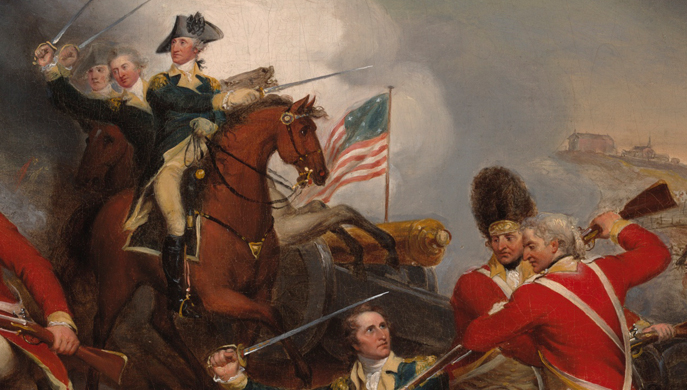
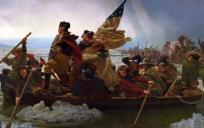
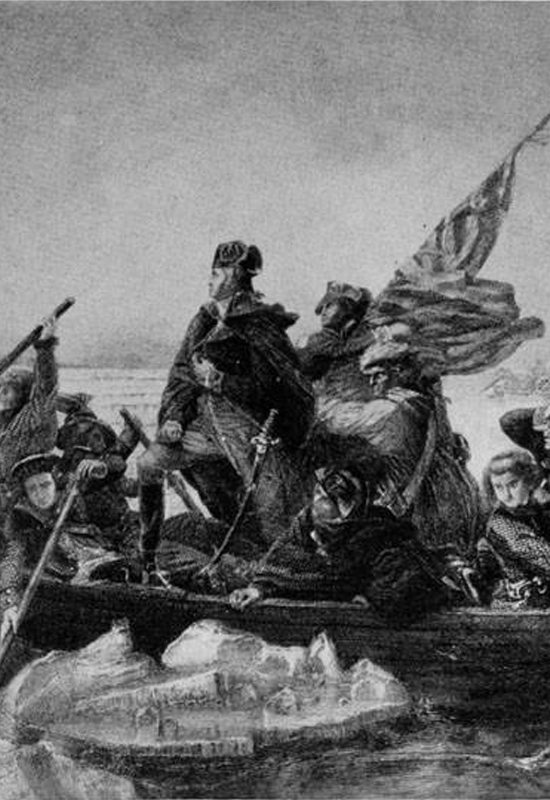
Expert panelists on the American Revolution explore the role of George Washington in the American Revolution. Throughout the episode, the panel discusses and describes how General George Washington first established the citizen soldier tradition in American military history.
GORDON WOOD, a preeminent scholar of the American Revolution and the early Republic, is the Professor Emeritus at Brown University. He earned an undergraduate degree from Tufts University and an A.M. and Ph.D from Harvard University. His 1992 book, The Radicalism of the American Revolution, won the Pulitzer Prize for history and the Ralph Waldo Emerson Prize. He taught at Harvard and the University of Michigan before joining the faculty at Brown in 1969. He has authored many works, including The Creation of the American Republic, 1776-1787, and Revolutionary Characters: What Made the Founders Different.
SCOTT STEPHENSON earned his MA and Ph.D. in American history from the University of Virginia. His broad public history experience includes work as a curator, historical interpreter, scriptwriter, and historical and visual consultant. He has developed and collaborated on exhibits, films, and interpretive programs for numerous historical sites and organizations, including Colonial Williamsburg, the Smithsonian, the Canadian War Museum, the National Park Service, George Washington’s Mount Vernon, the Senator John Heinz History Center, and the Museum of the Cherokee Indian. He joined the Museum of the American Revolution in 2007 and has led the team creating the Museum’s exhibits, media experiences, and public programs.
PHILIP MEAD holds a Masters and Ph.D. in American history from Harvard University. His doctoral dissertation, “Melancholy Landscapes: Writing Warfare in Revolutionary America,” examined over 150 Revolutionary soldiers’ diaries, and explored their wartime creation, later manuscript circulation, and their influence during the early republic. He has held research fellowships at the David Library of the American Revolution, The New York Historical Society, and The McNeil Center of Early American Studies at the University of Pennsylvania. He spent two years as a Lecturer in Harvard University’s Program on Degrees in History and Literature. In 2011, he began consulting as historian to the exhibit development team for the Museum of the American Revolution. He joined the staff as full-time curator in 2014 and is now the museum’s Director of Curatorial affairs and Chief Historian.