


Record date:
Medal of Honor Recipient Jack H. Jacobs Interview
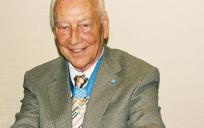
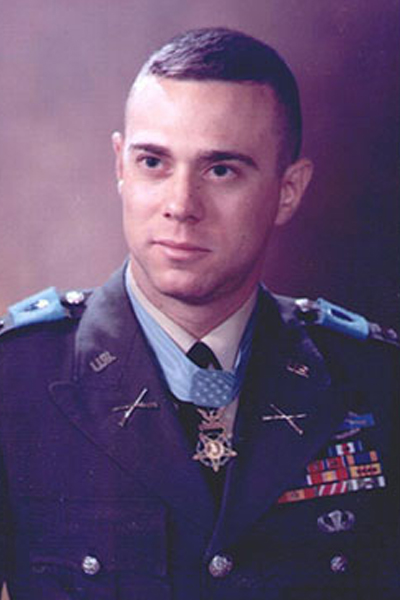
Fresh out of college and facing a stack of bills, Jack Jacobs requested assignment with an airborne division, with an eye towards the extra pay he would earn for hazardous duty. When the Army assigned him to be an adviser instead, Jacobs developed an incredible knack for finding hazardous situations anyway.
In 1966, Jack Jacobs finished school at Rutgers and, with plans to attend law school in the future,
needed a steady paycheck to support his wife and young daughter. Two years later, 1LT Jacobs was an adviser to a South Vietnamese infantry battalion in the Mekong Delta. They were searching for a group of Vietcong when the tables were suddenly, violently turned; in a devastating firestorm, the battalion’s commander was badly wounded, and their defenses were thrown into chaos.
Although badly hurt as well and barely able to see, Jacobs took command and withdrew the unit to safety. He returned to the scene of the attack several times, as intense fire continued around him, to rescue the wounded and perform first aid. That day, he saved the lives of thirteen soldiers and another adviser, and stopped only when he was no longer capable of moving; the extremity of his wounds was such that he would never regain his senses of taste or smell.
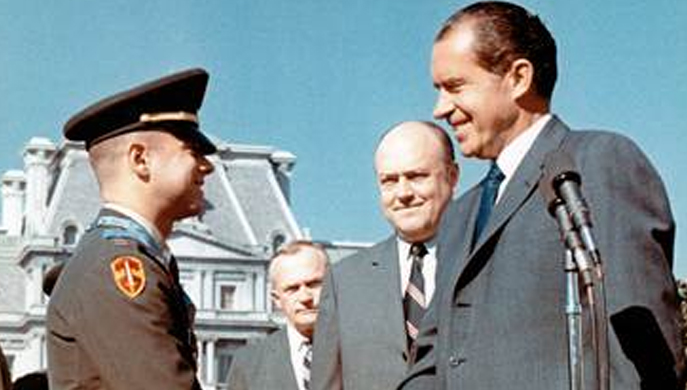
Jacobs received the Medal of Honor in 1969. After finishing graduate school, he returned to Vietnam for another tour of duty, during which he walked away unscathed from a helicopter crash. Over the course of more than twenty years of service, Jacobs also earned three Bronze Stars and two Silver Stars. Today, he is an analyst for NBC/MSNBC News, and makes regular trips to report from Iraq. The title of his new memoir, If Not Now, When?, comes from a line of Jewish philosophy that ran through his mind on that fateful day in 1968.
His Citation Reads:
For conspicuous gallantry and intrepidity in action at the risk of his life above and beyond the call of duty. CPT Jacobs (then 1LT), Infantry, distinguished himself while serving as assistant battalion advisor, 2d Battalion, 16th Infantry, 9th Infantry Division, Army of the Republic of Vietnam. The 2d Battalion was advancing to contact when it came under intense heavy machine gun and mortar fire from a Viet Cong battalion positioned in well fortified bunkers. As the 2d Battalion deployed into attack formation its advance was halted by devastating fire. CPT Jacobs, with the command element of the lead company, called for and directed air strikes on the enemy positions to facilitate a renewed attack. Due to the intensity of the enemy fire and heavy casualties to the command group, including the company commander, the attack stopped and the friendly troops became disorganized. Although wounded by mortar fragments, CPT Jacobs assumed command of the allied company, ordered a withdrawal from the exposed position and established a defensive perimeter. Despite profuse bleeding from head wounds which impaired his vision, CPT Jacobs, with complete disregard for his safety, returned under intense fire to evacuate a seriously wounded advisor to the safety of a wooded area where he administered lifesaving first aid. He then returned through heavy automatic weapons fire to evacuate the wounded company commander. CPT Jacobs made repeated trips across the fire-swept open rice paddies evacuating wounded and their weapons. On three separate occasions, CPT Jacobs contacted and drove off Viet Cong squads who were searching for allied wounded and weapons, single-handedly killing three and wounding several others. His gallant actions and extraordinary heroism saved the lives of one U.S. advisor and 13 allied soldiers. Through his effort the allied company was restored to an effective fighting unit and prevented defeat of the friendly forces by a strong and determined enemy. Capt. Jacobs, by his gallantry and bravery in action in the highest traditions of the military service, has reflected great credit upon himself, his unit, and the U.S. Army.