








Record date:
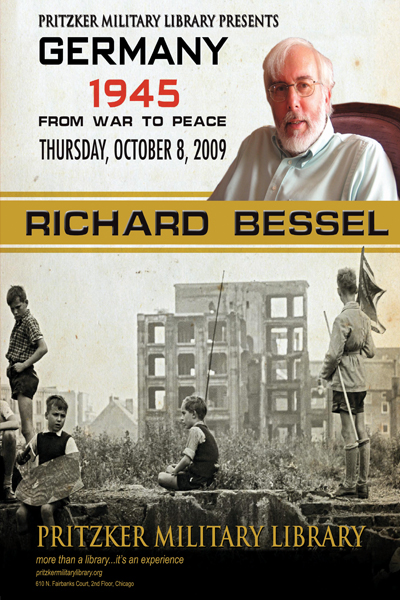
Richard Bessel: Germany 1945: From War to Peace
The Nazis took a vow from the memory of their nation’s defeat in World War I: there would be no armistice to end this war, no humiliating terms of surrender to drape on the mantle of the Fatherland. It was a vow they would keep: by the end of World War II, Germany was so completely destroyed that there was virtually nothing left to surrender.
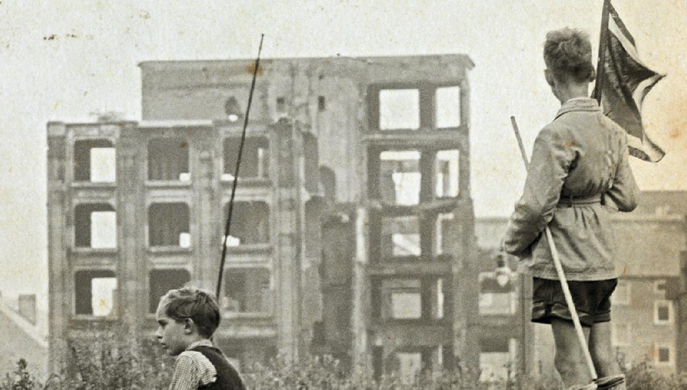
Germany 1945 is a collection of scenes from a year of cataclysm, one which saw the total collapse of the Third Reich; in Bessel’s estimation, no country had ever been more thoroughly defeated in modern world history. While January began with a defiant radio address by Hitler, massive Allied bombing campaigns soon claimed nearly half a million civilian lives, and left more than 26 million homeless. By May, Soviet soldiers were clowning around in Hitler’s deserted office, and others were out among the population, eager to repay atrocities committed earlier on Russian soil. Over the summer, the post-war contest for control began, with the former “master race” now reduced to passive observers of their own fate. And by the end of December, German citizens had but one cause for optimism – that while hunger and life amid ruins were not over, at least 1945 was.
Bessel finds several memorable images from those twelve months, observing as despondent Germans drink bottles of wine they had saved for the victory celebration, and a chilling final rush of activity takes place at Dachau. Days before the fall of the Nazi government, white sheets are unfurled from apartment windows in Berlin, and a small town in Bavaria sends a surrender delegation out to meet approaching Allied tanks; the knowledge that Americans are good sources of chocolate and cigarettes begins to pay dividends in forming post-war loyalties. The shock of 1945 left many Germans at first bitter and full of a repugnant self-pity, but it would also, in time, pave the way for their remarkable transformation into a peaceful and prosperous nation.
Richard Bessel is a professor of twentieth century history at the University of York. He works on the social and political history of modern Germany, the aftermath of the two world wars and the history of policing. He is a member of the editorial boards of German History and History Today, and the author of Nazism and War, Germany after the First World War, and Political Violence and the Rise of Nazism.