When the Cold War Ended, and Why It Still Matters
When the Cold War Ended, and Why It Still Matters
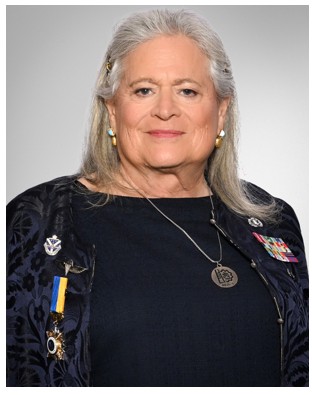
By LTC Jennifer N. Pritzker, IL ARNG (Retired), Founder and Chairwoman of the Pritzker Military Museum & Library
December 26, 1991, is a date most Americans pass over without notice. There was no parade, no surrender ceremony, no moment that felt like a clean victory. And yet that was the day the Cold War officially ended, marked by the dissolution of the Soviet Union and the quiet conclusion of a conflict that shaped nearly half a century of American life.
That quiet ending explains why Cold War veterans are so often overlooked. They trained for a war everyone hoped would never come. They stood watch in missile silos, submarines, intelligence posts, laboratories, embassies, and bases around the world. Many never fired a shot in combat, but that does not diminish their service. It defines it. The Cold War demanded constant readiness, discipline without applause, and patience measured not in months or years, but in decades.
As a Cold War Veteran myself, serving in the U.S. Army, U.S. Army Reserve, and the Illinois Army National Guard from 1974 to 2001, I know that recognizing Cold War veterans matters, especially now, as deterrence, alliances, intelligence, and information warfare once again shapes global policy and remind us how much of today’s world was forged during those years.
The Cold War was not a pause between wars. It was one of America’s longest periods of preparedness and conflict. Nearly every major conflict since 1945 grew out of it or was shaped by it, including Korea, Vietnam, the Cuban Missile Crisis, the wars of the Middle East, Yugoslavia, the ongoing threat from North Korea, and now the war in Ukraine. You cannot fully understand today’s world without understanding that lineage.
The War was defined by the persistent threat of nuclear war. I have childhood memories of Nike Hercules Missiles stationed across the street from where I lived in Chicago. For forty-six years, Cold War veterans prevented nuclear war and a conventional war in Europe larger than anything seen since World War II. Nuclear weapons made the Cold War mostly cold. That deterrence shaped the world we still inhabit and continues to influence how nations calculate risk and restraint today.
Cold War veterans deserve clear and public recognition for the service they rendered and the lives they lived in readiness. Their work explains what the Cold War was, when it took place, and why it mattered, not through textbooks, but through lived experience. It is due to their extraordinary service that I have committed to creating a Cold War Veterans Memorial.
In the months and years ahead, our work to recognize those who served during the Cold War and the sacrifices of veteran’s families, who accepted uncertainty and vigilance as part of everyday life, will take shape through the Memorial and in partnership with the PMML.
Cold War veterans are now perhaps the largest group of living veterans, and they are aging. The youngest are around fifty and time is not on our side. That is why the Cold War Memorial must be more than a physical marker. It must be supported by serious historical work, including articles, podcasts, book discussions, and films, and eventually a dedicated digital platform focused on Cold War history and the lived experience of its veterans. For my granddaughter, born in 2010, the end of the Cold War is farther back in time than the end of World War I was for me when I was born in 1950. Perspective fades quickly if it is not tended.
Many Americans do not realize that if they served in uniform prior to December 26, 1991, they are Cold War veterans. Civilian federal service during the same period also qualifies. Those veterans are eligible to apply for a Cold War Certificate of Appreciation from the U.S. government, though the application must be made personally through the U.S. Army website, regardless of which branch you served. For years, legislation has circulated to establish an official Cold War Service or Victory Medal. Some states, including Alaska and Louisiana, already recognize Cold War service at the state level. That recognition is meaningful. Service that lasted decades deserves full federal acknowledgment.
At the Pritzker Military Museum and Library, our focus remains the citizen soldier, not as nostalgia, but as civic responsibility. The Cold War proved that military strength and civic strength are inseparable. On December 26, please pause to honor those who stood watch for decades, often without recognition. The Cold War officially ended on that date, but the world it shaped did not. I look forward to honoring Cold War Veterans through creating a memorial for everyone to learn about their historic service and the importance of the lessons that came from this War.