
Record date:
Donald Collings Transcript.pdf
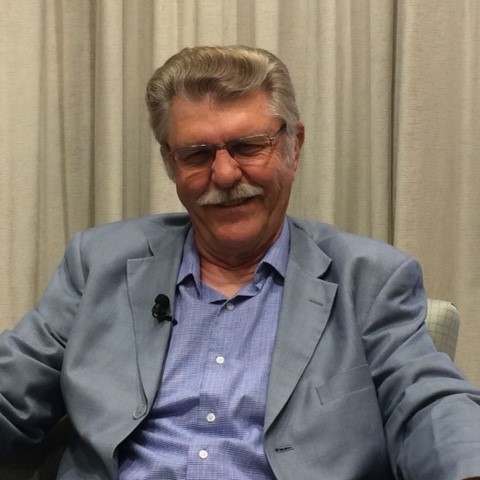
Donald J. Collings, Master Chief Petty Officer, US Navy
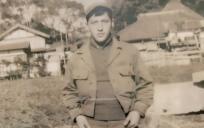
Serving as a Navy Hospital Corpsman in the Combined Unit Pacification Program in the Vietnam War in 1970-1971, was not the ‘game plan’ for a young Don when he walked by a Navy recruiting sign in town. Yet he adjusted to every new turn with enthusiasm. No surprise then that Collings achieved the rank of Master Chief Petty Officer and that his military career spanned from 1967-1997.
Born in 1947, Collings grew up on a farm outside of Williston, North Dakota. Handy and self-sufficient, he attended high school in town and spent two years at University of North Dakota- Williston Center [now Williston State College]. Then he happened upon a recruiting sign for the US Navy. In July 1967, he began boot camp at Camp Berry at Great Lakes Naval Base, unbeknownst to him, following in the exact footsteps of his father and uncle. He adapted to the discipline and appreciated being part of the Blue Jacket Choir, even performing at a professional football game! He graduated from the Great Lakes Hospital Corps School in January 1968, managing a home visit at Christmas.
Collings’s first duty station was the Naval Hospital in Portsmouth, Virginia. For two months he enjoyed working as a corpsman in the hospital. The corpsmen, largely men, and the nurses, largely women were close in age and worked as a team rather than get stuck on rank. Unfortunately, the Pharmacy School there was not to Colling’s liking, and his request to leave put him under the scrutiny of the Academic Review Board. As a result, he was sent to the 1st Marine Division, attending the Field Medical Service School at Camp Pendleton, California. After three weeks in school, Collings received new orders for the 5th Marine Division, Camp Pendelton, California. He trained with the Marines, qualifying with various weapons, but primarily providing medical support.
Collings’ who had his 3rd class stripe but with little practical leadership experience, answered the call of managing corpsmen at the 5th Marine Division, 1/28, Company C. They relaxed by going out for beer during their spare time. Collings next worked with the Headquarters Company of the 28th Marines where he tended to both patients and the health records of the company. He remained at Camp Pendelton for twenty-two months until he and 138 other corpsmen and dental technicians deployed to Vietnam, in June 1970, landing in Da Nang.
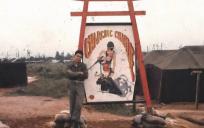
At the 1st Marine Division Headquarters in Da Nang, Collings was deployed to the 3rd Battalion, 5th Marine Regiment where he was charged to clean up 5000 health records in preparation for an inspection. After three weeks, Collings was reluctantly sent to the Mike Company, 3rd Battalion, 1st Marines CUPP [Combined Unit Pacification Program] Squad whose headquarters was based on Hill 32, near An Hoa. This program was intended to win over the hearts and minds of the Vietnamese. Collings’ squad would rotate from village to village within a few miles of this area. They carried their tents, air mattresses, combat gear etc. in addition to the medical equipment.
The villagers immediately identified Collings as Bac Shi, a doctor. Many would come daily for issues like stomach aches or infected sores caused by scratched insect bites. Collings was treating 75-125 patients a day. A few young boys, twelve – fourteen-year-olds wanted to learn how to provide care and proved to be extremely helpful. Collings carried out other duties such as night patrols and radio operator. The Marines generally got along well with the villagers; some would eat with them, combining the servicemen’s C-rations with the locals’ rice.
It was on Sept. 19, 1970, at dinner, when Collings heard an explosion. He sprang into action and quickly treated a Marine for chest wounds. He believes that his own life was saved when he erroneously ‘heard’ a Marine in a foxhole call for a DOC. He quickly checked the perimeter locations and found no one hurt.
The next morning while on a radio watch, he sent 3 Marines for a “bodysweep” looking for evidence of enemy casualties from the night before. Soon one of these marines tripped a bobby trap, injuring 2 of the 3 marines. He managed to get these men medevacked, no small feat with the helicopters facing fire. Later that morning, Collings saw a few Vietnamese civilians approach them. Luckily, he maintained a cool head and asked an interpreter to speak to them, rather than pull a trigger. If anyone had fired on the civilians it would have been disastrous.
In mid-December, Collings was reassigned to the Battalion Aid Station in the rear as part of the 1st Battalion, 1st Marines, and then was later transferred to the 2nd Battalion of the 1st Marines. However, by Christmas Eve, he was in contact with the enemy again when replacing an injured corpsman in a mortar platoon. He was back at Hill 32 by New Year's Day and worked in medical supply with the 1st Battalion, 1st Marines.
In light of the increased use of marijuana in Viet Nam, a drug education program was launched. Colonel Zadke, the Division Inspector, appointed Collings to be the instructor. With $20,000 of illegal drugs in a sealed box and a curriculum, Collings was flown by helicopter all over the division Area of Operation to give presentations, relishing his newly discovered strength as a teacher.
With word of his pending return home in April 1971, Collings intended to separate from the service. His mentor, Colonel Zadke, thought otherwise and ‘strongly suggested’ him to apply for the Drug and Alcohol Specialist School, in San Diego. After graduation, he and his girlfriend, Mabelle got married in Encinitas California. They traveled to North Dakota then on the Great Lakes where Collings’ was assignment as an instructor, in the Administrative Command, attached to the Chaplain’s Department. After four years of this, Collings re-enlisted and was transferred to Guam, where he worked in Patient Affairs. During Operation New Life some of Vietnamese refugees needed medical care supervised by the Patient Affairs Department.
After two years, he transferred to Camp Pendleton, where he was the division liaison to the surgeon’s office. Yet Great Lakes called upon him again in various roles that included Chief of Security and Chief of Operating Management Service. Another proposed switch back to Camp Pendleton put the kibosh on Collings’ active duty of fourteen years. Instead, in December 1981, Collings joined the US Navy Reserves. He worked with a Cargo Handling Battalion for two years. He was recalled to active duty and assigned as the Division Officer for Basic Military Orientation Recruit Training Command. After completing this assignment Collings was reassigned to CHMSUS unit, liaising with civilian hospitals.
Collings’ civilian career often dovetailed nicely with his military one. For thirteen years, he taught at the Instructor Training School at Great Lakes. This was interspersed with occasional meetings with his Reserve boss, right across the street. For the next eight years, Collings found a billet as master chief in the Readiness Assist Team until his retirement in 1997.
In his interview, Collings also reflects on bringing back difficult stories, PTSD, adaptability, camaraderie, and technological change. The Citizen Soldier is best exemplified by the Reserve contingencies.