Landscapes of the Revolution: Kay Smith’s American Legacy Collection
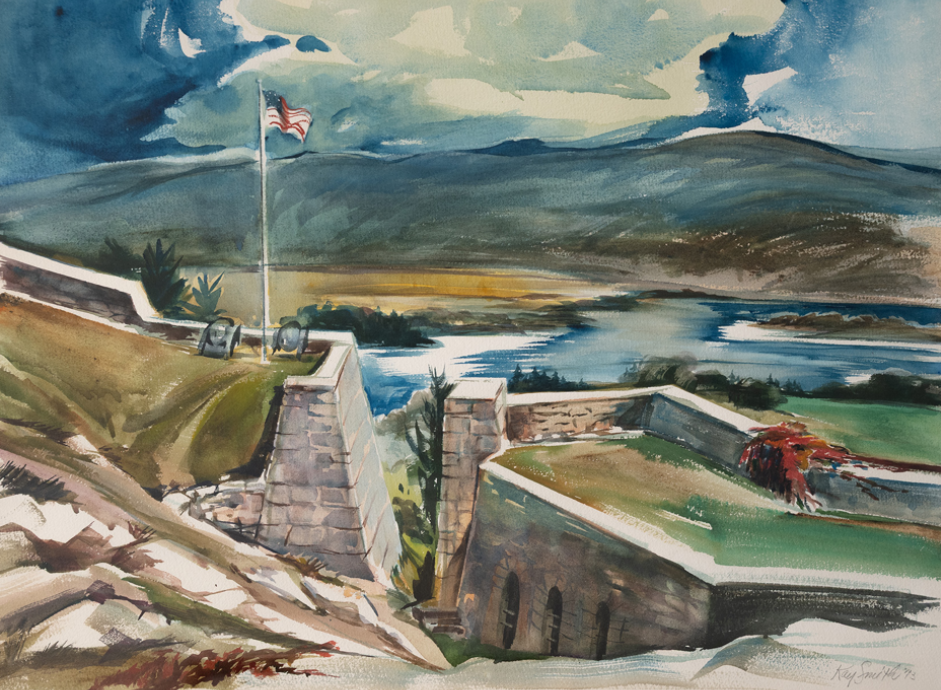
The Pritzker Military Museum & Library is celebrating our nation’s 250th anniversary with a new exhibit, Landscapes of the Revolution: Kay Smith’s American Legacy Collection. On display from June 12, 2026–January 2, 2027, the exhibit features original artwork by Illinois Artist Laureate Kay Smith. Known for her exceptional watercolor landscapes, Smith dedicated much of her life to depicting the structures and settings associated with the American Revolution.
In 1971, Chicago artist Kay Smith was commissioned to create a series of paintings depicting places connected with the American Revolution for a book commemorating the nation’s 200th birthday. Over the following years, Smith traveled across the United States and Europe researching and sketching her subjects. These watercolor paintings of landmarks, monuments, and battlefields were created on site at the same time of year—often on the same date—as the events they depict. She named this group of paintings The American Legacy Collection.
Despite pressure over the years to sell off individual works, Smith kept the collection intact, as she believed it held greater cultural value as a complete panorama of American history. Her dream was to have it exhibited for America’s 250th birthday. The Pritzker Military Museum & Library is proud to partner with the American Legacy Collection Foundation and Kay Smith’s daughter, Julia Smith, to fulfill that vision by exhibiting twenty-five of her remarkable watercolors. Through her careful attention to detail and atmosphere, Smith transforms familiar landmarks into vivid, emotional experiences, helping us see these places not as distant relics, but as living connections to our shared history.
The exhibit includes depictions of important battle sites such as Fort Ticonderoga, Fort Moultrie, and Yorktown, as well as historic buildings like Independence Hall, where the Declaration of Independence was signed; Old North Church, where lanterns were hung to signal the route of approaching British troops; and Fraunces Tavern, where George Washington bid an emotional farewell to his fellow officers at the end of the war.
Remembering the places of the American Revolution helps us better understand the struggles and sacrifices that shaped the United States. Battlefields such as Lexington and Concord, historic buildings like Independence Hall, and homes of influential figures like George Washington and Paul Revere connect us directly to the people and events that created a new nation. Sites like Valley Forge, where soldiers endured a harsh winter, remind us of the perseverance required to achieve independence. Through paintings like Smith’s, these locations become more vivid and immediate, allowing us to visualize the past and appreciate its lasting significance.