Inside the Vault: Jerry Adler’s Korean War
Inside the Vault: Jerry Adler’s Korean War
By Scott English, President & CEO and Lindsay Robbins, Archivist
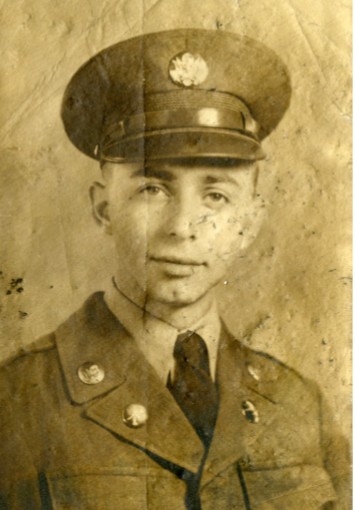
Before Jerry Adler went to Korea, he said something to his mother that he would remember for the rest of his life.
His parents had driven him to LaGuardia Airport for his flight west. Adler was 21 years old, headed into the Army and then Korea, and about to board an airplane for the first time. His mother hugged him and asked what she would do if he did not make it home.
Adler tried to answer fear with practicality. If he were killed, he told her, she would collect the $10,000 GI life insurance policy. Then came one more hug, and he boarded the plane. Years later, in a postwar account, he called it one of the dumbest and most insensitive things he had ever said.
It is not a battlefield scene, but it is the right place to meet him. In that moment, Adler is not yet the soldier writing home from Korea. He is a son at an airport, trying to sound steady while his mother asks the question he cannot really answer.
That is where our most recent Inside the Vault program began. Inside the Vault is one of the PMML’s newest public programs, created to bring visitors closer to collection material that is usually seen only by staff and researchers. The point is not to present a finished exhibition in miniature. It is to spend time with the evidence itself, close enough to see how a story begins to take shape. This program centered on the Jerry Adler Collection, the wartime record of a young soldier from Jersey City who served in Korea. His letters carry the story, but the materials preserved with them help us understand the world pressing in around those words and the war he could only explain one day at a time.
Adler was born in Jersey City in 1931, and Korea was still far from the life he knew when the Army sent him there in the summer of 1952. He served with the 2nd Infantry Division and returned home in June 1953, only weeks before the armistice. While the service record tells us where he went, the letters show a young man making sense of the war while he was still inside it.
By August 1952, Adler was writing home like someone learning how quickly discomfort could become normal. Cots had arrived, so he no longer had to sleep on the ground. The next day was supposed to be a day off, but work found him anyway. In the same letter, he told his parents that a man from his battalion had been awarded the Medal of Honor after being killed at Heartbreak Ridge.
Adler was referring to Sergeant First Class Tony K. Burris of Company L, 3rd Battalion, 38th Infantry Regiment, 2nd Infantry Division. Burris had been killed the previous fall during the fighting for Heartbreak Ridge, and his Medal of Honor was presented posthumously to his mother at the Pentagon on 14 August 1952. Adler placed that story beside a more modest statement about himself.
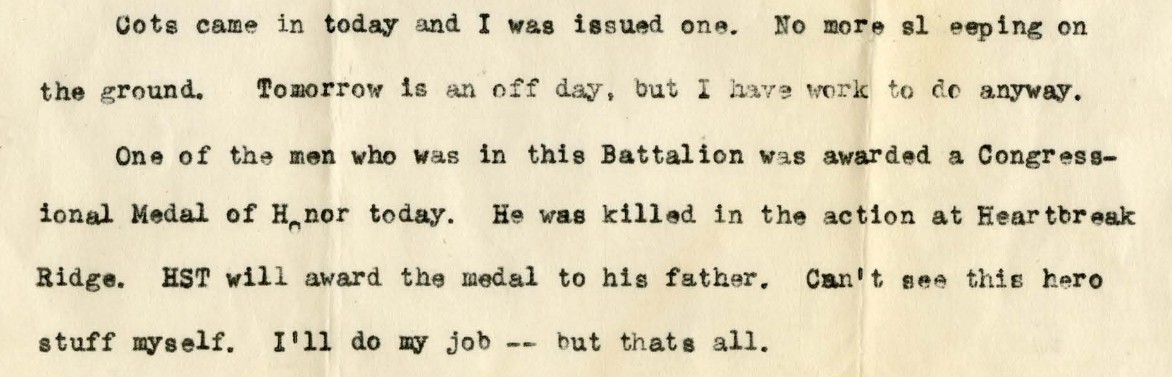
Burris had gone beyond the call of duty. Adler did not describe himself that way. “I’ll do my job, but that’s all,” he wrote.
When Adler wrote about the war, the strain often came through the daily business of getting by. On 17 August 1952, he asked his parents to send food packages because, as he put it, “You literally starve here.” His battalion was moving to the front the next morning, but he still gave them the reassurance parents needed from a son at war: “I’ll be safe, though.”
Nine months later, the complaints had not softened much. By May 1953, Adler rejected the idea that meals in Korea were better than at Fort Dix. The bread was the same every day. Fresh vegetables and milk were absent. Meals were eaten outside in whatever weather came over the hill. “I think I eat an ounce of dirt with every meal,” he wrote.
Adler needed to get some things off his chest, but he did not want his parents to worry. His letters move between complaint and reassurance. He gave them enough truth to understand the hardship, while keeping the worst of it at a distance.
People at home wanted to know more than Adler could easily tell them. He had only so much daylight, and most of it did not belong to him. He reminded his parents that he was not “a newspaper correspondent sending them eye-witness reports of the war daily.” But he also knew what their letters meant on his end. “A few letters and an occasional package make you feel as if someone is pulling for you.”
At times, the Army set that limit for him. On 25 August 1952, Adler told his parents he had been transferred from Public Information Officer work to the Battalion Intelligence section. He was close to the line, but on the reverse slope of a hill, sheltered from some of the fire coming over the front. Then he stopped where he had to stop. “I cannot disclose the nature of my work,” he wrote, “but it is time consuming and interesting.”
It was enough to reassure them that he had a job and some distance from the worst of the fighting. It was not enough to let them know what he was really doing.
By May 1953, Adler had begun thinking about home, but he was not ready to believe in it. Too much had happened around him. Men had been killed nearby while he came through untouched. “It’s just the breaks of the game,” he wrote. He would not feel safe, he admitted, until he was on the boat headed for the United States.
Furlough sounded almost unreal. Adler thought he might spend his first week back “in a daze.” Korea had felt endless while he was there, but now the months seemed to have gone by quickly. He could still picture faces from home, even when the names would not come.
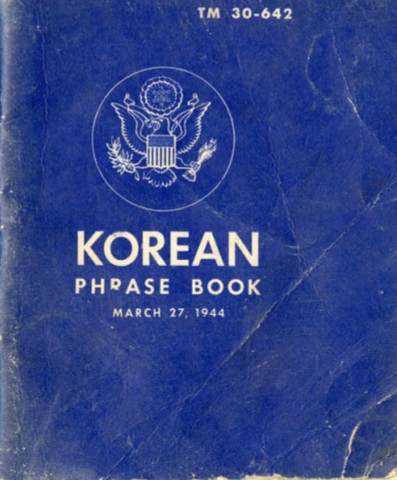
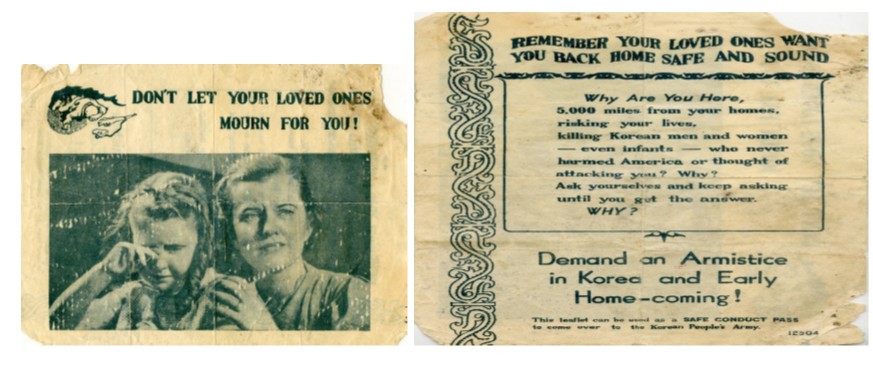
The letters are not the only surviving pieces of Adler’s war. Other materials in the collection bring the distance from home into view. His identification card gives a face to the young man writing from Korea, and the phrase book shows how far he was from the life he knew. The wartime leaflets open a different side of the conflict, one that reached soldiers through fear, rumor, and the promise of home.
They were not letters home. They were messages aimed at soldiers far from home, using fear, fatigue, and the hope of survival. Adler’s letters show the kind of pressure those messages were meant to reach.
Adler’s story survived because someone kept the letters. Many families have something like that from a loved one who served, something that may still feel too personal to share and too important to throw away. It may have started as a family keepsake, but with care, it can also become part of how others understand service.
Keep it safe. Write down what your family knows while the details are still close. And when you are ready, we would be glad to talk with you about the story those materials carry and whether they may belong in the PMML’s collection.
Make A Difference - Become A PMML Member