The American Revolution and the First Citizen Soldier
The American Revolution and the First Citizen Soldier
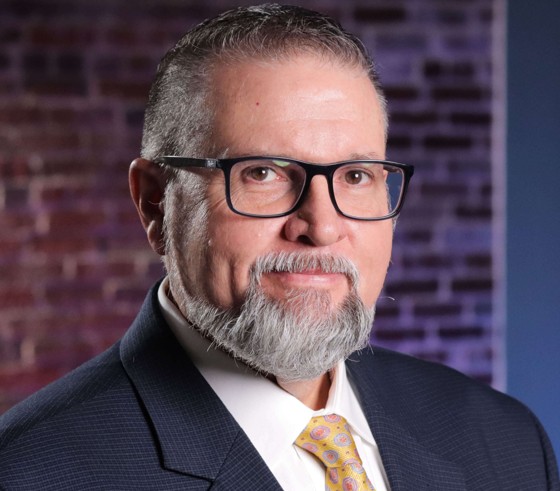
By Scott English, President, Pritzker Military Museum & Library
The American Revolution did not begin with a professional army waiting in formation. It began with ordinary people who believed liberty required something from them. They understood that freedom was not handed down; it had to be defended.
That is where the story of the Citizen Soldier begins.
The theme of this year’s Liberty Bash and Liberty Gala, “Spirit of ’76: The Birth of the Citizen Soldier,” takes us back to the moment when the American experiment moved from theory to action. The Revolution placed a hard question before the colonies. Would liberty remain a hope, or would it become a shared responsibility? For those who stepped forward, liberty was no longer just an idea to defend. It became a duty they carried, first at home and then on the battlefield.
The first Citizen Soldiers did not seek war. They were rooted in the places they called home, and that is what gave their service its meaning. At Lexington and Concord, men stepped away from ordinary lives because liberty had become personal. They answered as neighbors and citizens, defending not only their rights, but the possibility that free people could govern themselves.
George Washington gave that tradition its most enduring example. Before he commanded the Continental Army, he was a farmer, a public servant, and a man already trusted with responsibility. When Congress called, he accepted a burden with no guarantee of success. His army often lacked what it needed, and the cause itself could seem one lost battle or one brutal winter away from collapse.
Yet Washington understood that the Revolution was more than a fight for independence. It was also a test of whether military service could strengthen a republic without overpowering it. That belief shaped his leadership. The army had to defend liberty while remaining answerable to civilian authority. Service had to rest on duty, not ambition.
Washington’s most powerful act may have come not in battle, but at the end of the war. After independence had been won, he surrendered his commission and returned to private life. “Having now finished the work assigned me,” he told Congress, “I retire from the great theatre of action.” He gave power back because the republic mattered more than the man. That example helped define the American idea of military service: the Citizen Soldier answers the call, serves the nation, and remains bound to the responsibilities of citizenship.
That connection between service and citizenship makes the Citizen Soldier essential to a free society. A republic cannot survive on rights alone. It needs citizens willing to serve something larger than themselves, in uniform and beyond it. The habits that sustain freedom are learned not only in moments of crisis, but also in the ordinary work of community, family, and public life.
That is why “Spirit of ’76: The Birth of the Citizen Soldier” is more than a patriotic theme for us. It reminds us of what liberty asks from every generation, and why we must carry this legacy forward. The stories of Citizen Soldiers must be preserved and shared because they show freedom not as a passive inheritance, but as a responsibility each generation renews.
That work continues this year through Among His Troops: George Washington and the Citizen-Soldier Tradition, a limited-run special exhibition developed by the Museum of the American Revolution in Philadelphia and coming to the Pritzker Military Museum & Library from June 12, 2026, through January 2, 2027. The exhibition brings Washington’s leadership into sharper focus during the 250th anniversary of the founding of the United States. Visitors will see artifacts connected to Washington’s Revolutionary War headquarters tent, learn more about the Continental Army, and reflect on Washington not only as a commander, but as an American Citizen Soldier.
At the PMML, we preserve and share these stories so future generations can understand the people behind the service and the citizenship that continues after the uniform is set aside. These stories remind us that the defense of a free society depends on more than armies and institutions. It depends on citizens who understand what they have inherited and choose to build on it.
The Citizen Soldier stands at the center of that story. From the first shots of the Revolution to the generations that followed, the idea remains the same: free people must defend the republic and return home committed to making it stronger. Washington embodied that responsibility, and so did the ordinary Americans who stood with him. Their legacy is not locked in 1776. It lives wherever citizens understand that liberty must be carried forward.
Liberty survives when citizens choose to serve it. That is the Spirit of ’76.